

Hi there!
You see and hear it everywhere: LEGO is getting more and more expensive.
We’ve been hearing this for years from consumers, content creators, and, of course, regular LEGO fans. Time and again, people say: LEGO used to be much cheaper—you got more for your money—and these days, the sets are getting more and more expensive.
But is that really true?
That’s exactly what we’re going to take a closer look at today. I’ve picked out two comparisons that I think are pretty good: a police station from the ’90s versus one from today, and a classic knight’s castle versus a modern Creator 3-in-1 castle.
And especially when you factor in inflation, the number of parts, and today’s discounts, the whole thing gets pretty interesting.
Let’s get started!
Police Station in 1998 vs. Police Station in 2020
Let’s start with the police.
In 1998, ” 6332 Command Post Central” was released.
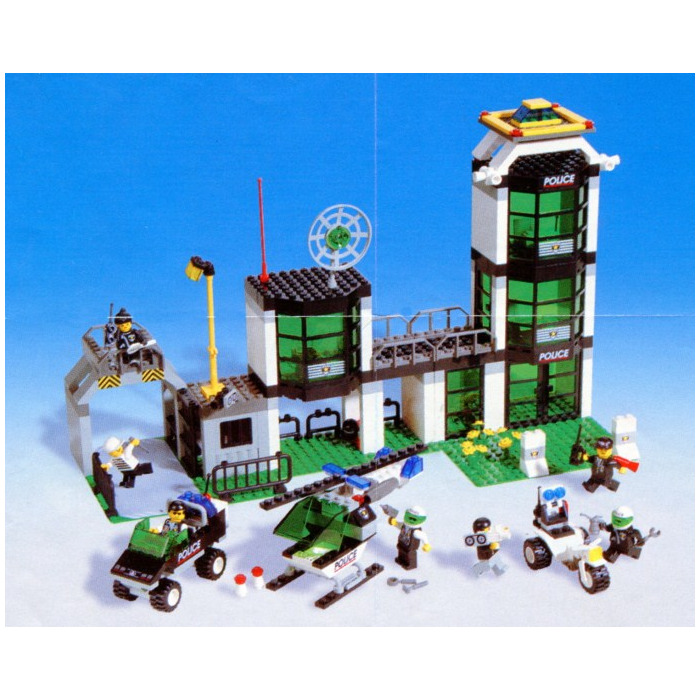
The police headquarters set from back then consisted of 270 pieces, included seven Minifigures, and had a U. S. MSRP of $60. Adjusted for inflation, that’s roughly $111 today.
And for many, this set is the very essence of childhood.
It features the iconic green windows, a small jail cell, a helicopter, several police vehicles, and, of course, plenty of police officers. Basically, exactly what you’d expect from a large police station.
Let’s fast-forward 22 years.
In 2020, the 60246 Police Station set was released, featuring 743 pieces, seven Minifigures, and a MSRP of 99.99 euros or 99.99 dollars.
Click here for a Price Comparison: https://www.brick-tracker.de/preisvergleich.php?set=60246
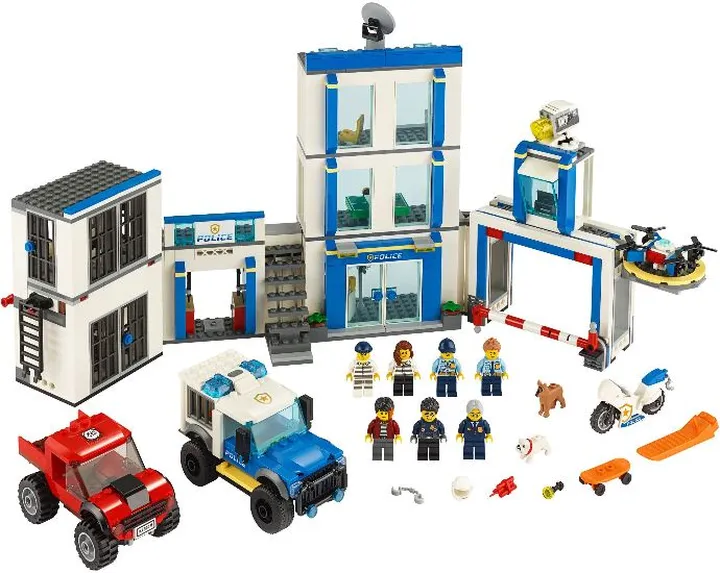
Here, too, we find the main building with prison cells, police vehicles, robbers along with their vehicle, a drone, and various smaller play options.
And when we put the two sets side by side, the difference is actually pretty interesting.
The number of minifigures is exactly the same.
However, the old police station has only about 36 percent of the number of pieces found in the newer model. And even if we adjust the price from back then for inflation, the old set—at around $111—would actually be slightly more expensive than the $99.99 that LEGO charged for the new police station in 2020.
Just for fun, I’d even say that the newer police station offers at least as much.
Sure, the helicopter is missing, but in exchange you get the robbers right away and various ways to reenact a prison break.
So even with our first example, the statement “You used to get a lot more for less money” isn’t quite so clear-cut.
Ritterburg in 1995 vs. Ritterburg in 2025
Things get even more interesting with a classic LEGO knight’s castle.
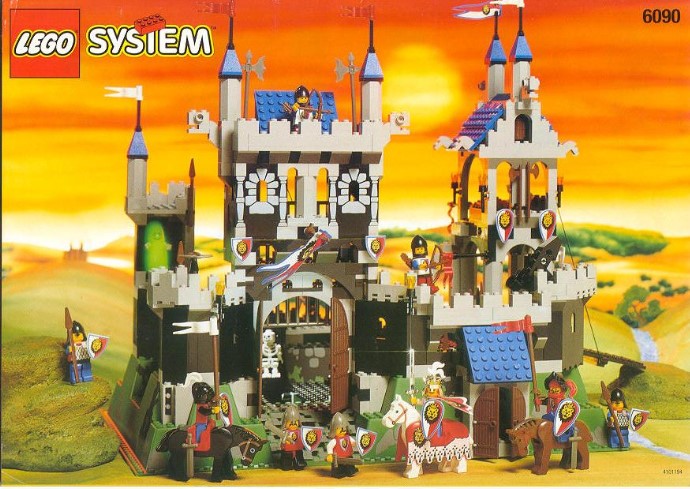
The legendary 6090 Royal Knight’s Castle was released in 1995.
And this set is, of course, an absolute classic.
764 pieces, eleven Minifigures, horses, the 3D baseplate, the beautiful blue roofs, the chrome crown, and, of course, the ghost that glows in the dark.
The US MSRP at the time was $95. Adjusted for inflation, that would be about $204 today.
Thirty years later, in 2025, the 31168 Medieval Horse Knight Castle was released.
The Creator 3-in-1 set costs 119.99 euros in Germany and $129.99 in the U.S., and consists of a whopping 1,371 pieces. It also includes six Minifigures and two buildable horses.
For Price Comparison: https://www.brick-tracker.de/preisvergleich.php?set=31168
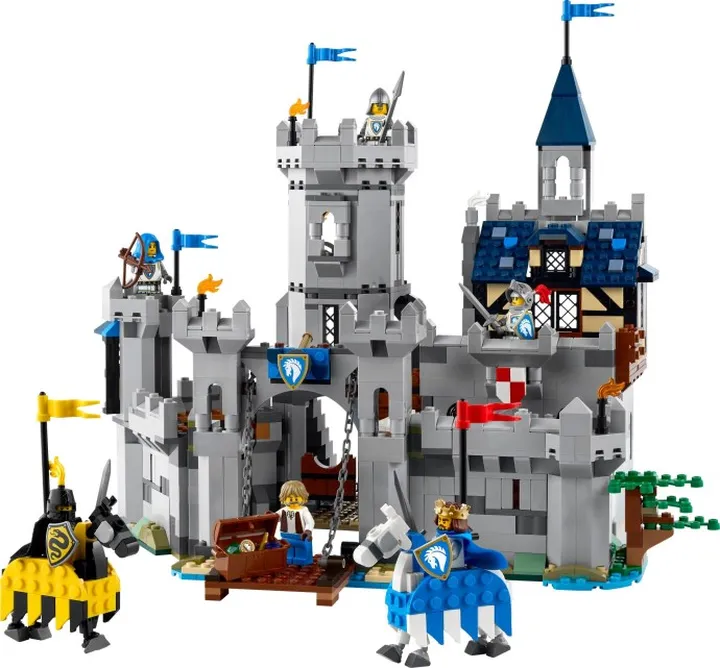
And this really highlights how differently LEGO designed its sets back then compared to today.
The old castle is a true, cohesive, all-in-one package.
Large building pieces and the 3D baseplate ensure that you can build a pretty massive castle using relatively few bricks.
Today’s model, on the other hand, consists of significantly more parts and features a more detailed front end, but it is completely open at the back.
And that’s exactly where I can certainly understand the criticism from many fans.
This modern set has almost twice as many pieces, but it still feels incomplete.
This is because LEGO, especially in the ’80s and ’90s, used a lot of very large pieces. A complete wall was sometimes made up of just a few elements. Added to that were the 3D plates, which provided a perfect base.
These days, many things are made up of numerous small pieces.
This results in significantly more detail and more complex construction techniques—but, of course, it also causes the number of parts to skyrocket.
And now here’s the point that many people overlook: discounts
And that brings us, in my view, to the most important point in this whole discussion.
The MSRP is much less of a deciding factor today than it used to be.
Of course, there were deals back in the ’90s and 2000s as well.
And even during the—for many—legendary LEGO Star Wars era around 2014, you could regularly find sets on sale.
But the kind of permanent discounts we see today were much less common back then.
These days, it’s completely common for almost any LEGO set released on the open market to eventually go on sale at a 30 percent—or in some cases even 40 percent—discount.
Let’s take our police station as an example again.
The 60246 had a MSRP of 99.99 euros.
According to our price data, the best price at the time was around 66.99 euros at times.
Suddenly, we’re no longer talking about a 100-euro set.
We’re talking about a large police station with 743 pieces and seven Minifigures for just under 67 euros.
This is even more evident with the current 31168 Medieval Horse Knight Castle set.
The official MSRP is 119.99 euros.
At the time of this article, you can already get it for about 82.99 euros, and its best price so far has even been around 75 euros.
And that’s exactly why, personally, I no longer just look at the MSRP when it comes to many new sets.
For example, when LEGO announces a set that’s available to the general public for 120 euros, I think to myself, “For80 euros, that would actually be pretty good.”
It gets more complicated with LEGO-exclusive models.
After all, these items aren’t usually available with a 30% discount. You’ll have to wait for the clearance sale or for double Insider Points plus a free gift.
Things look a little better with sets that are exclusive to certain retailers. Even there, with a little patience, you can often get a 20 or 30 percent discount.
And that’s exactly why the Brick-Tracker exists—here you can compare LEGO prices around the clock and find the best deals.
So let’s go back to the question. Was LEGO really cheaper back then?
My answer would be: Yes—but at the same time, no.
Of course, the numbers on the price tags are higher today.
A LEGO set priced at 120, 150, or 200 euros stands out much more at first glance than a set that might have cost 60 or 100 dollars in the past.
But money does lose its value over the course of decades.
If we factor in inflation, the situation suddenly looks quite different.
Adjusted for inflation, our 1998 police station would have cost about $111. The 2020 police station cost $99.99.
The difference is even greater when it comes to the Knight’s Castle: The $95 from 1995 is equivalent to about $204 today. The modern Creator Castle costs $129.99 in the U.S.
Of course, these are just two examples, and you can’t use them to generalize about the entire LEGO product line.
And yet still gain a good understanding.
These days, you just have to factor in things like discounts.
My Conclusion
LEGO is getting more expensive.
But LEGO was expensive even back then.
And I think that’s exactly what we sometimes forget pretty quickly when we get caught up in nostalgia.
On top of that, today’s models are more detailed, have significantly more small pieces, and in some cases, we have very different expectations for the sets.
Whether you like this trend is another question entirely.
For example, I can completely understand when someone says, “I’d rather have a large, complete castle with 700 pieces than a detailed open-concept set with 1,300 pieces.”
That is a completely legitimate criticism.
In terms of price, however, the situation looks much less dramatic once you factor in inflation and, above all, today’s discounts. It almost seems as if it’s actually getting cheaper.
And in my opinion, it is precisely these discounts that are all too often completely overlooked in this discussion.
If a set costs 120 euros but is repeatedly available for 80 euros throughout its entire lifespan, then for many buyers, that 120 euros is simply not the actual price.
That’s why I wouldn’t say, “LEGO used to be cheap and is expensive now.”
I’d say LEGO has always been a pretty expensive hobby—it’s just that the types of sets, our budget, and, above all, the ways to buy them more affordably have changed dramatically.
Now I’m curious: What do you all think about this?
Do you think LEGO is really way too expensive these days?
Or are inflation and discounts often overlooked in this discussion?
And do you think our two comparisons—the police station and the knight’s castle—are appropriate?
Feel free to share your thoughts in the comments!
For the best LEGO Price Comparison, check out Brick-Tracker. LEGO® Price Comparison, Top Deals & Marketplace | Brick-Tracker
Author: Dante